For decades, mentions of Malawi gold referred more to tobacco and illicit hemp than the precious stones that have triggered an upsurge nationwide. However, the ensuing gold rush has left hills, waterways, forests and farmlands pitted— overstretching environmental protectors like Jane Kaira of Nkhotakota.
The country’s most storied source and conduit of illegal hemp has become a top gold producer, with crowds jostling for ores in mining hotspots.
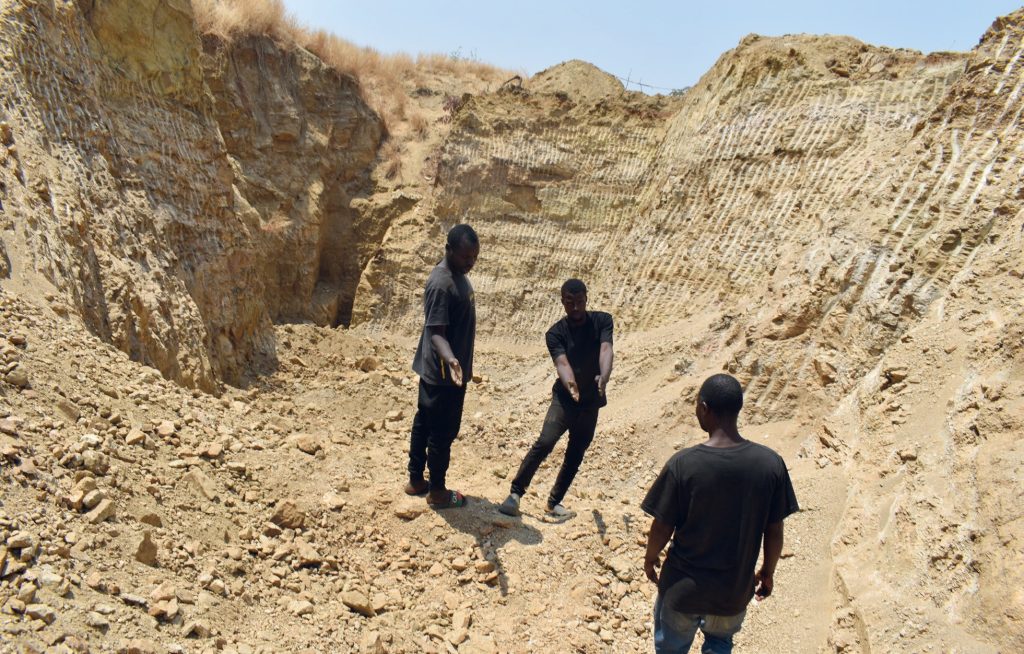
Kaira observes: “My job focuses on the extraction of natural resources, especially how it affects the environment and human health. We’ve to do it sustainably, but we aren’t.
“Many people have abandoned farming and fishing in favour of gold mining, which involves a lot of excavations and water use. In some sites, you’ll find 500 to 100 people digging in rivers, streams, farmlands and forests.”
Lack of mining officers in districts such as Nkhotakota leaves the likes of Kaira too overstretched to police the impacts of gold panning on the environment under siege.
“I have been to the sites under siege. As a council, we hold awareness meetings and report cases to the Ministry of Mining [now a department], which is not devolved to the district. Unfortunately, my office is not fully devolved and doesn’t have the financial muscle and human resources to fill the gap,” she says.
Power to the people?
The piling of regulatory powers in a few hands at Capital Hill, the seat of government in Lilongwe, is a relic of authoritarian rule which Malawians rejected in the June 1993 Referendum.
It has defied nearly three decades of decentralisation, which policymakers widely marketed as power to the people.
For decades, agriculture has been the lifeblood of Malawi’s fragile economy since independence in 1964. Throughout his 31-year rule, founding President Kamuzu Banda repeatedly told Malawians the nation had no gold.
To the self-crowned Farmer Number One, the country’s hidden wealth was in the soil—meaning agriculture, which employs four in every five adults across the country.
That was until his downfall in 1994, some 13 years after lawmakers enacted the Minerals and Mines Act, amended in 2017 and two years ago.
However, the switch to democracy has instigated a frantic rush for mining to end poverty.
Bizarrely, policymakers, who sounded ready to shed power to the people, appear reluctant to make it work when it comes to mining.
This leaves activists and mineral-endowed communities wondering why Capital Hill seem shy to deploy mining officers in district councils as it did with other sectors.
They want authorities to stop remote-controlling the extractive industry from the capital city, Lilongwe.
To them, Capital Hill’s monopoly has failed to combat unsustainable mining, currently fuelling human rights violations, environmental degradation and land grabs.
“Apart from the failure to devolve district mining offices, there is structural exclusion of the civil society voices,” says policy analyst Mabvuto Bamusi. “Central government is in full control of the extractive sector and activists in mining districts like Balaka are vocal that the sector is not easy to regulate because it is captured. Government officials from Capital Hill come in posh vehicles, bypassing local councils until something goes wrong.”
Resource curse
The mining hotspots constantly welcome mining gatekeepers, including politicians, merchants and middlemen mistaken for buyers.
However, unregulated mining has left Malawi pitted, deforested, losing fertile soils and haunted by backstreet deals.
Laston Banda, CSO Network chairperson in Kasungu, where illegal gold mines have claimed 12 lives since September, says Capital Hill’s iron-fist grip leaves local communities and watchdogs groping in the dark.
He states: “Until the Natural Justice Network came to share mining justice tips, we didn’t know what was happening in our midst. The way the so-called investors are acquiring land and mining gold is exploitative.
“Unfortunately, affected communities have nowhere to complain as the government has not deployed district officers closer to where mining happens. Even the Mines and Mining Regulatory Authority [MMRA] does not adequately follow up on the licences to ensure they are not abused.”
The call for decentralisation of mining regulators gained sway in 2009 with the opening of Kayerekera Uranium Mine in Karonga.
The mine saw the extractive sector’s contribution to the domestic product surge to 10 percent. However, it dramatically dropped to one percent in 2014 following a temporary shutdown due to falling uranium prices on the world market and spiking energy costs.
Currently, government envisages the mining sector injecting up to 12 percent of the GDP by 2027, the second-largest share after tobacco, which contributes 13 percent.
However, local voices say the projected economic boost will be a rip-off unless authorities deploy mining officers to act as their eyes and ears in mining hotspots.
“As local communities, we feel that we are not respected or protected,” says Simon Thipa, from Phalombe, where Mkango is developing a rare earth mine. “We expect the government to do more to restore law and order. We need district offices where we can get information or present our complaints. We need a say on mining affairs.”
Work in progress
Director of Mines Mphatso Chikoti, now director general of the MMRA, says the mining regulatory body is “still a baby and devolution is in the final stages”.
He stated: “As MMRA, we are recruiting inspectors for the sector. However, devolution remains a work in progress.
“Until recently, we didn’t have a formula for allocation of resources to the districts. Now we know how to direct the resources to the district offices when they are decentralised. This gives us hope that we will soon have mining offices in the districts.”
However, Chikoti did not say how soon. This leaves unsustainable mining to its devices, warns Balaka-based mining justice activist Gift Mtupa.
“Practically, the absence of mining officers at the district level means that artisanal and small miners have no one to talk to when they need guidance regarding licensing, sustainable mining, or access to markets,” he says.